HARLOT
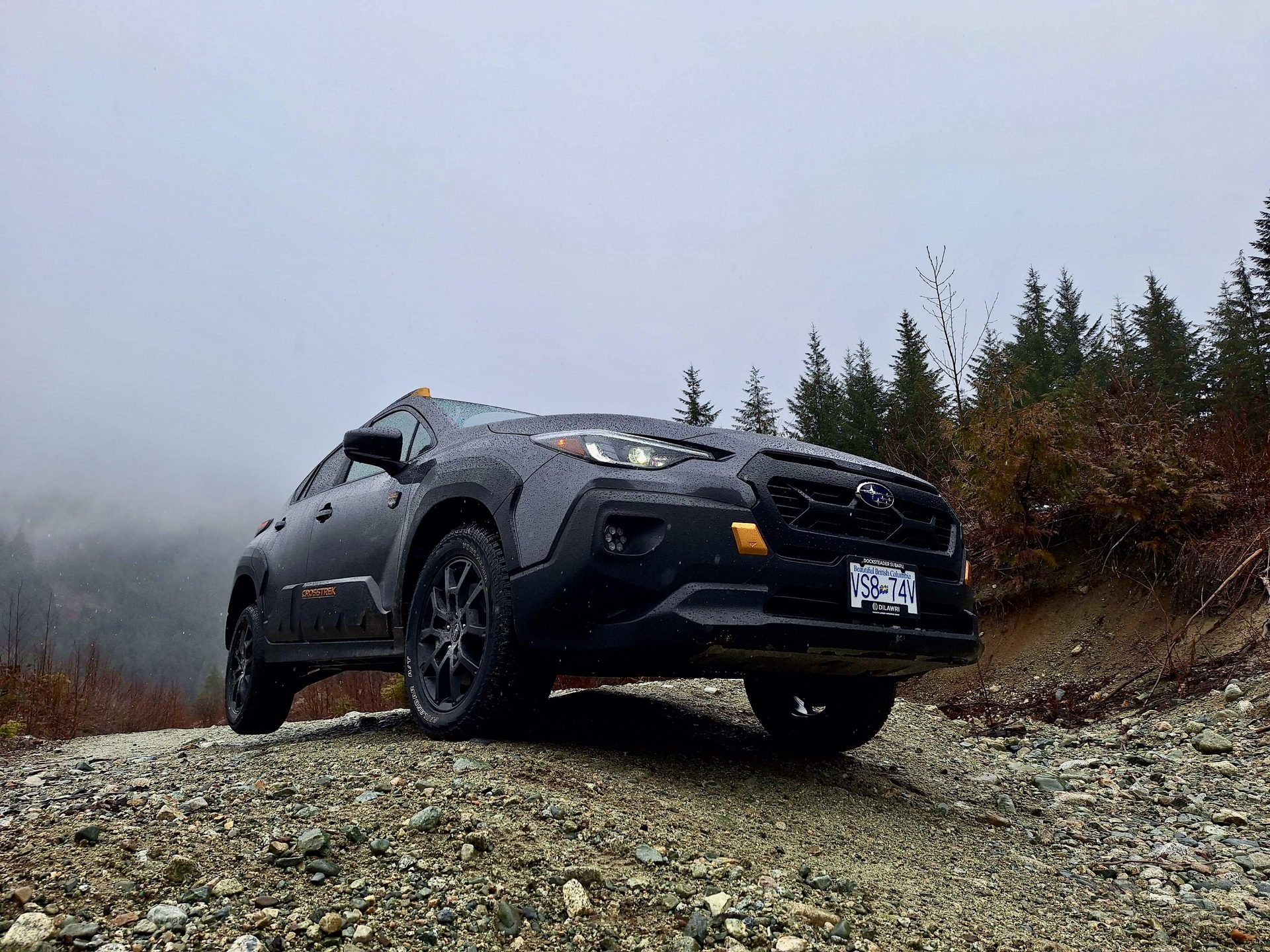
I’d been exploring our forestry roads in a track-ready JCW Mini, and the 4″ (102 mm) of clearance wasn’t doing me any favours. It was time for a change!
I am a life-long fan of Jeeps, and I love the cockpit on the new Grenadiers. I considered both for a long time. My short-list also included a Jimny and a 4Runner. Each of these was quite capable, but expensive once outfitted. I also live downtown, park in garages, and am not allowed to work on my own vehicle at home. Instead of going big, I started searching for something small.
I needed something nimble, high-clearance, low-height, capable on FSR spurs, and able to get me to some pirate campsites. I am often out solo, so extra points for reliability and self-recovery.
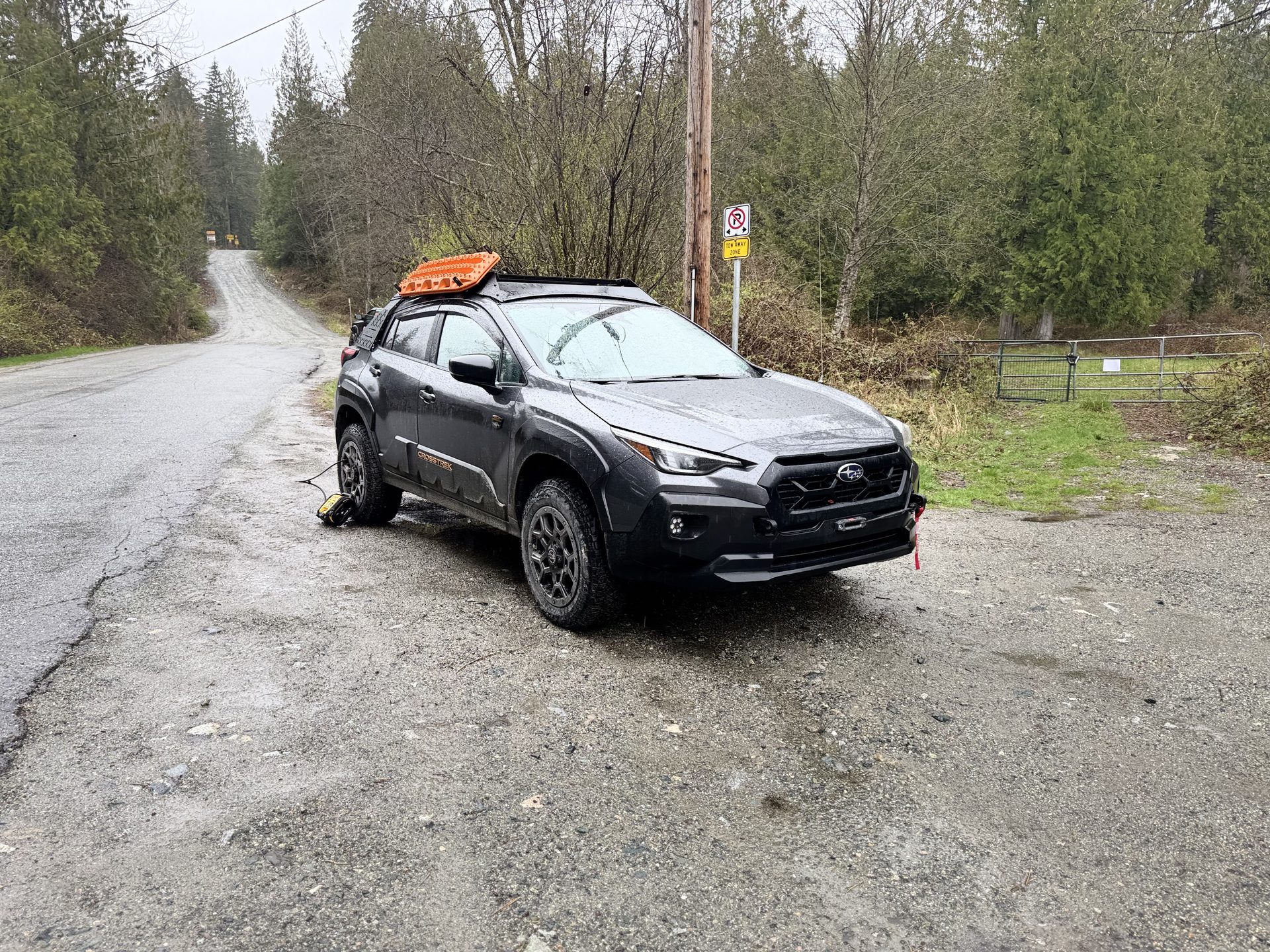
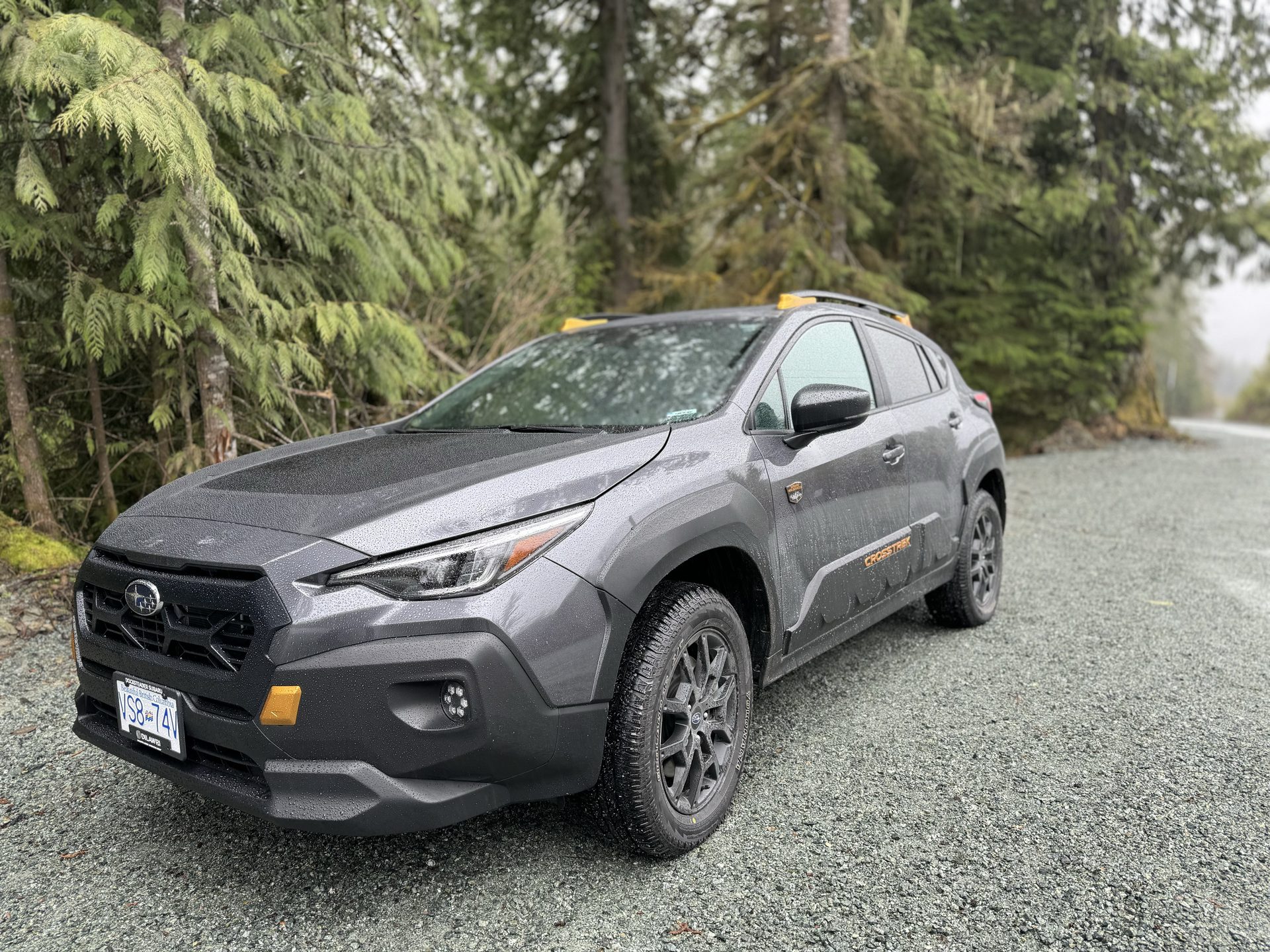
That’s what led me to the Subaru Crosstrek. The 2024 Wilderness edition specifically; it comes stock with 9.3″ (236 mm) clearance, a CVT cooler, upgraded 2.5L engine, and is re-geared for low-end torque. The Wilderness package also changes the bumpers slightly to increase departure and exit angles. All in a tiny package at an absolute steal of a price. It’ll not be able to rock-crawl, but with a few ugrades and the power of reckless momentum it’ll be much more capable than it looks.
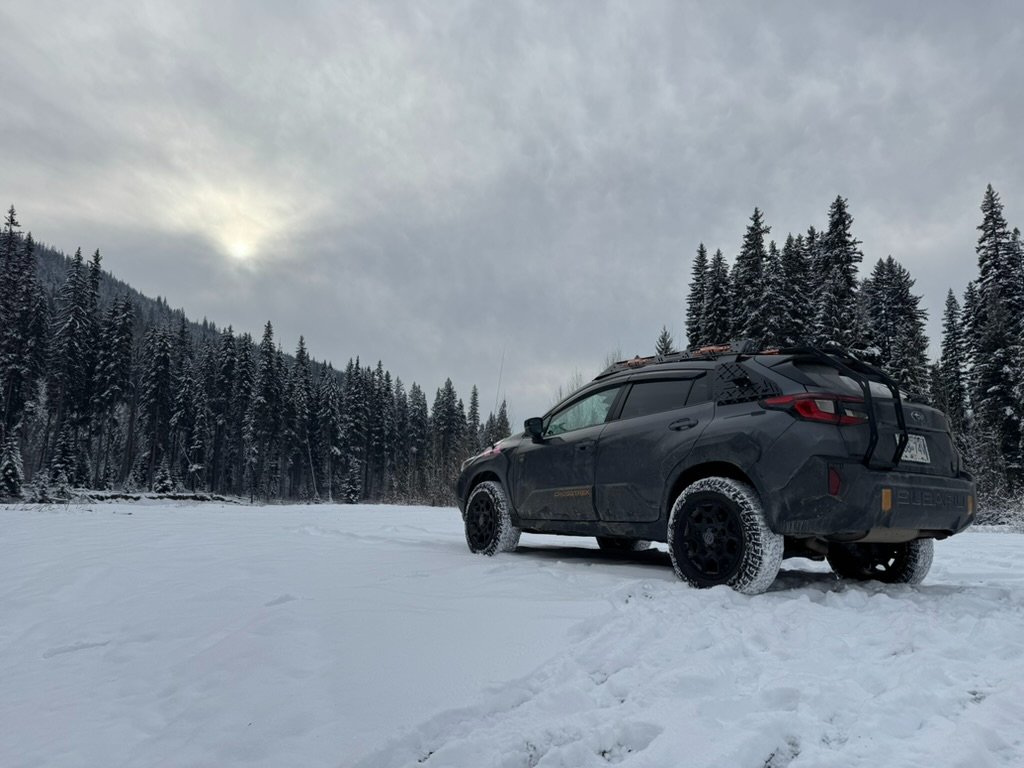
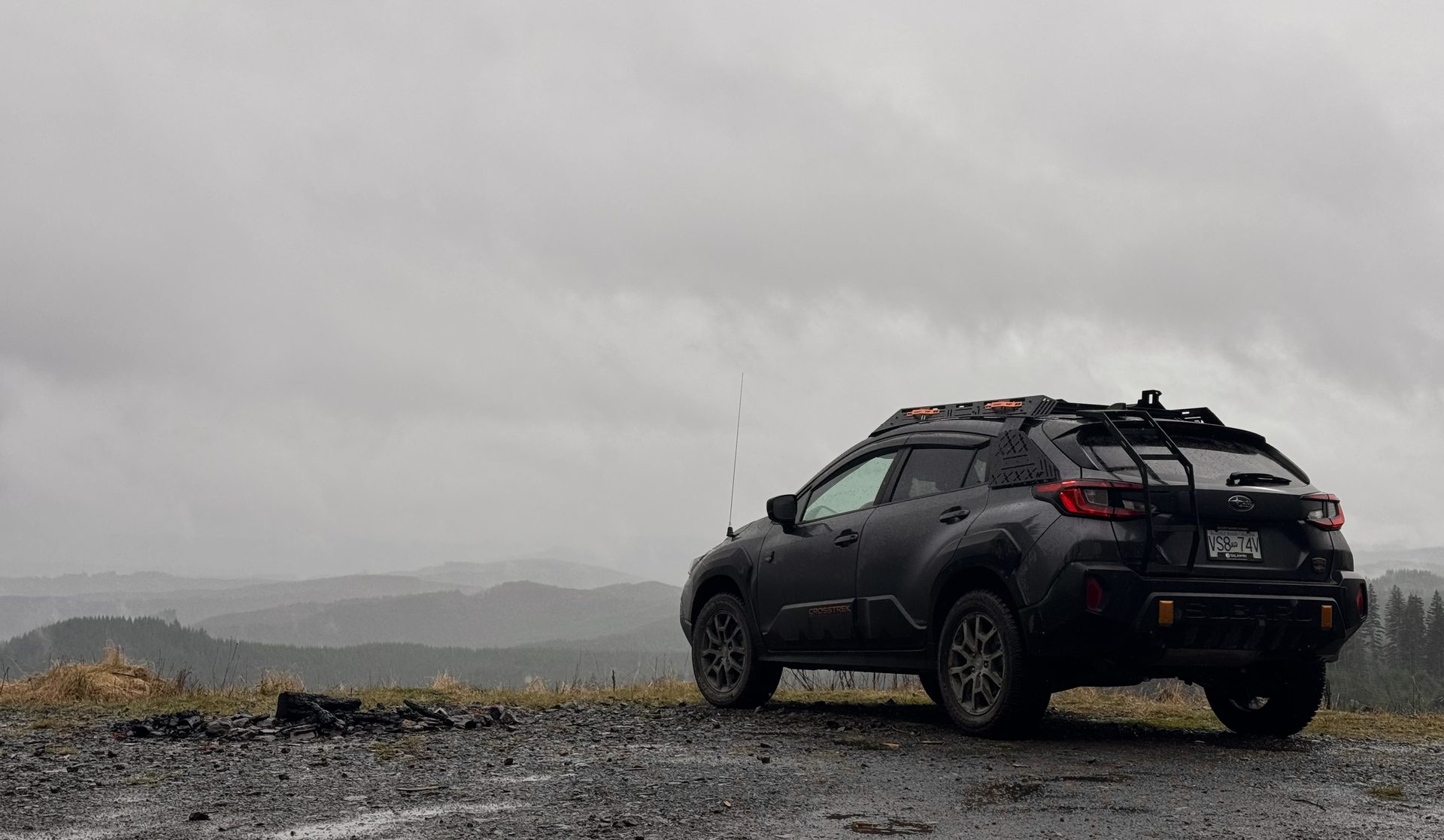
I christened my ‘Trek The Western Harlot, after a climbing pitch in Squamish. Two years and a pile of upgrades later, clearance is up to 11.3″ (287 mm) at the lowest point, and it hasn’t let me down yet.
R160 Rear Locker
The stock open diff sends power to the wheel with least traction. The TORQ mechanically locks both rear wheels — no wiring, nothing electronic to fail, and unlike XMode it keeps working over 40km/h. This helps with low key rock crawling without needing pure momentum to move forward.
2" All-Terrain Suspension Kit
Two inches (51 mm) of clearance under the diffs and body, better approach/breakover/departure, and room for bigger tires. Matched springs and dampers rather than spacers, so travel and damping stay tuned to the new height.
HD Rear Adjustable Arms + Links
Adjustable rear arms dial alignment back into spec after the lift, extended links keep the sway-bar geometry correct, and the heavy-duty construction shrugs off rock strikes the stamped factory pieces can’t.
HD Front Lower Control Arms
Fixes front-end alignment geometry after the lift with a lighter, more durable part. OEM rubber bushings keep the strength upgrade without the harshness or maintenance of poly/spherical. Also added disconnectable sway bars for the front.
Skid Plate Package
Three plates over the engine/oil pan, transmission, and rear diff — the three most expensive things to break under the car. Added oil access hole for the Fumoto valve.
Rock Sliders
Protect the rocker panels and pinch welds — the priciest sheet metal on the car. Unlike cosmetic side steps these are frame-tied and rated for the full weight of the vehicle: pivot on a rock or jack off them in the field.
Wildpeak A/T4W 225/65/17
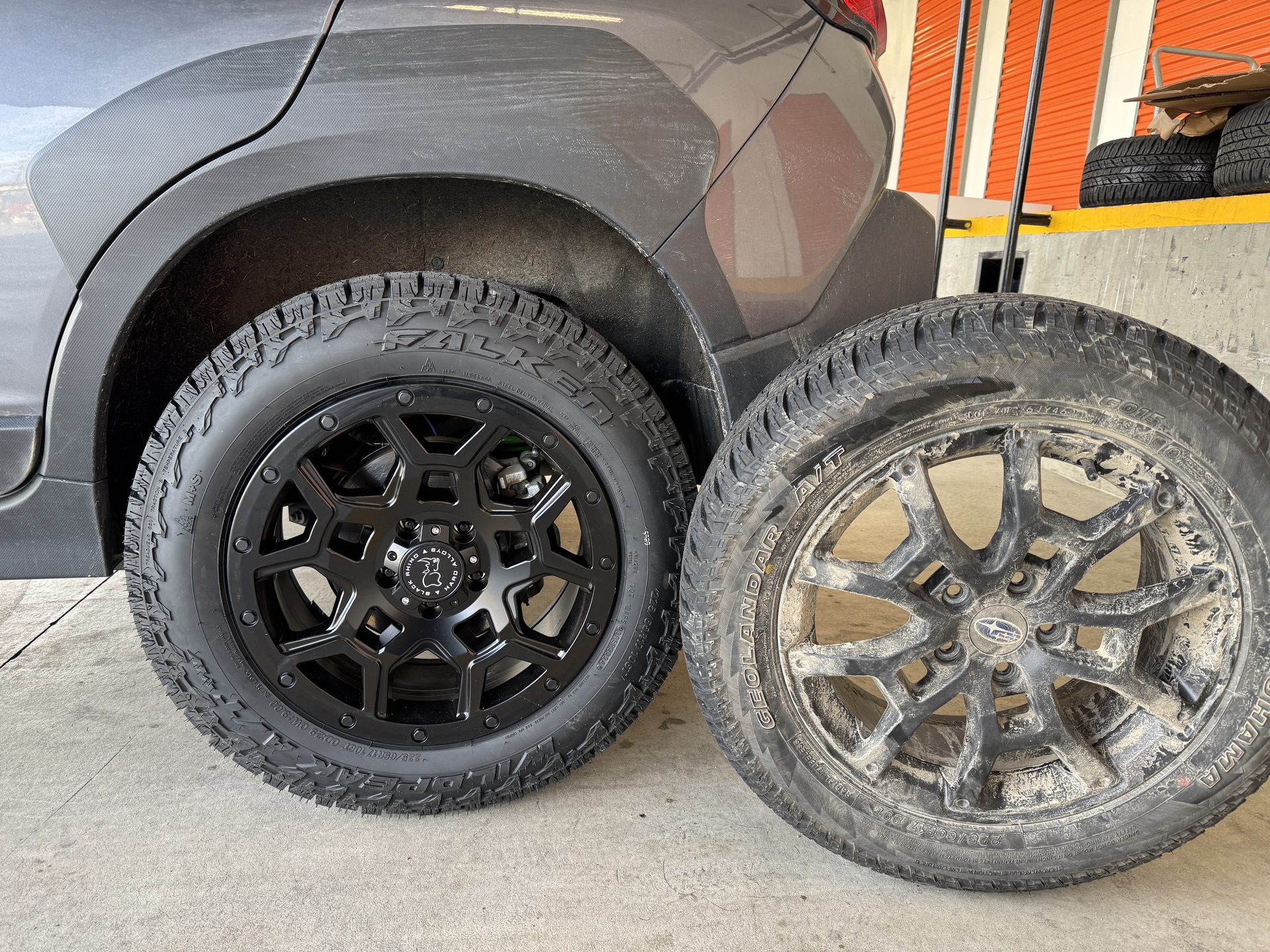
Tougher sidewall, deeper tread, and real mud/snow (3PMSF) capability over stock rubber. The extra 1″ (25 mm) of diameter adds a half-inch (13 mm) of lift, with no rubbing at any articulation thanks to the suspension.
Overland 17x8 Wheels +35mm
17” (vs stock 18”) gives more sidewall to air down with — where most off-road traction actually comes from. Wider stance for stability and a 2700 lb load rating vs the stock ~1500.
Axon 55-S Winch
Sized to fit behind the grille and to reward good rigging (double-line pulls) over brute force. This winch was meant for side-by-sides and will burn out if not used sparingly, but it’s there for tricky situations.
Hidden Winch Mount
Tucks the winch behind the factory bumper — preserving stock approach angle, airflow, crash structure, and the stock look with no heavy bull bar hanging off the nose. Doesn’t disable the active grille shutters.
Low Profile Roof Rack System
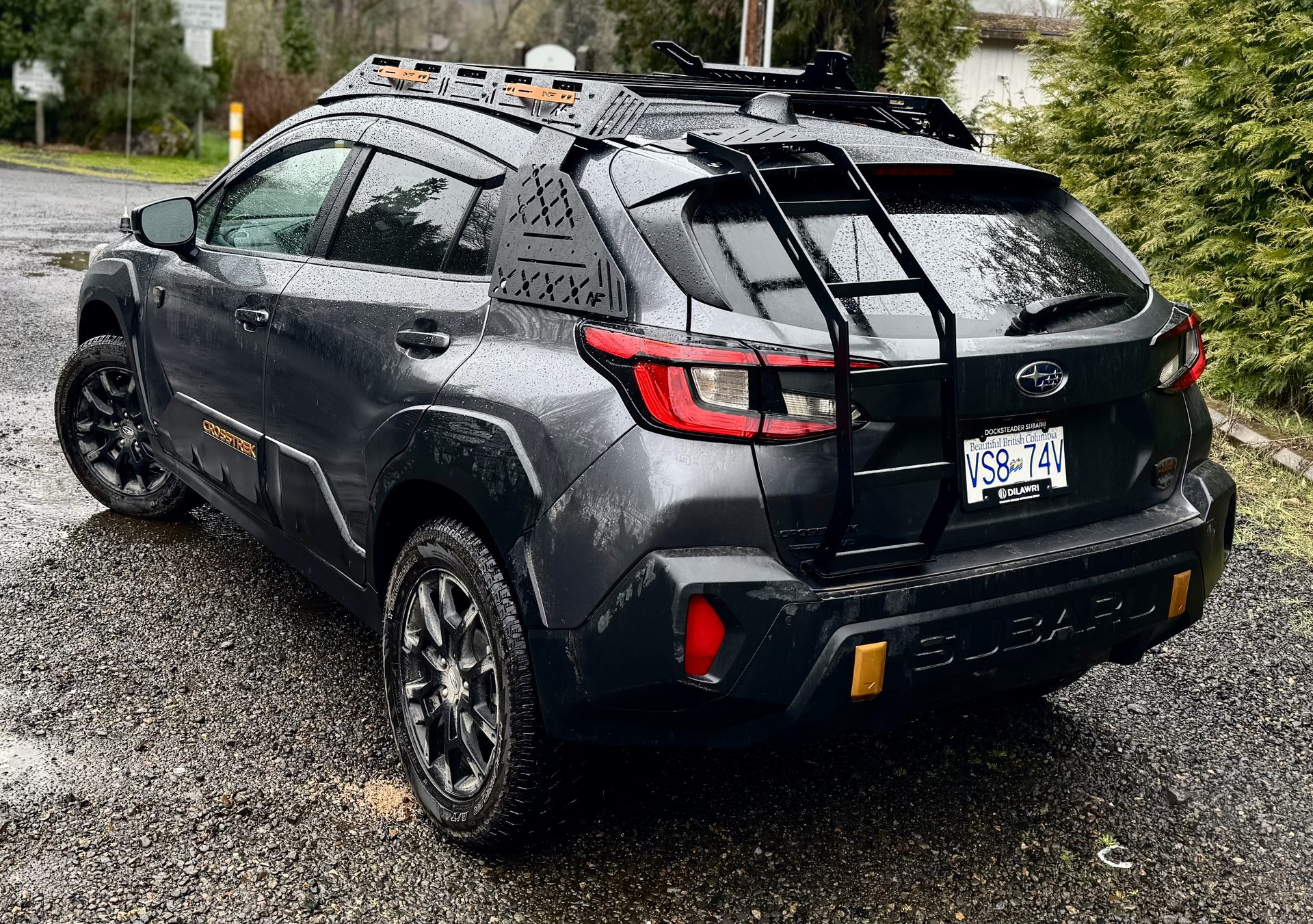
Replaces the factory rails and shaves 2″ (51 mm) off stock height — the difference between fitting a downtown garage or not. Crossbars for weight distribution, side MOLLE panels, ditch brackets, grab handles, and a ladder for strapping tools.
NX-1700HAK VHF Radio
Licensed, programmed, and registered for safety comms on logging roads. Mounts cleanly in the center console with clearance to spare, antenna on a Tacoma fender bracket.
Accessories & Recovery Kit
Fumoto oil drain valve, MaxTrax MkII pair, Rotopax locking mount + fresh water tank, Wolfbox G900 TriPro dashcam w/ bumper camera, Accentrek vinyl, and OEM door guards, footwell lighting, LEDs & rain guards.
New shoes
Falken Wildpeak A/T4W on 17×8 Black Rhinos (left) next to the stock 18″ Geolandar setup (right). More sidewall to air down, a tougher casing. I often drive in areas with sharp rocks, volcanic glass, and deep mud - having something a bit extra here helps a lot.
The two-inch problem
The stock roof rails, plus additional aftermarket rails, plus whatever gear I throw on the roof (like a spare tire) is all too much to fit into my condo garage. Getting the NashFabCo low-profile roof rack saves me the few inches I need to squeeze under. The ladder at the back helps roll the spare off the roof without breaking the back window.
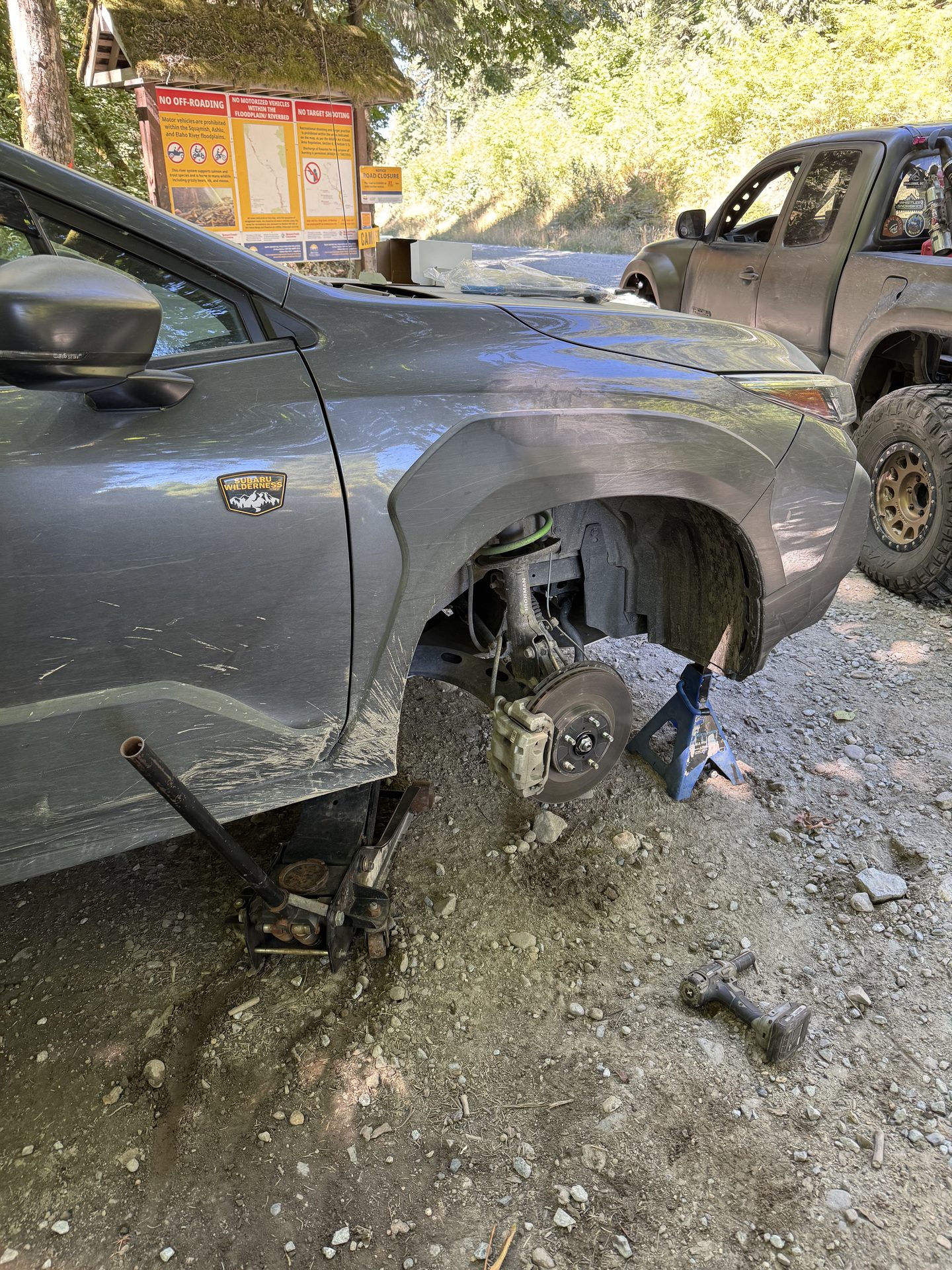
Trailside surgery
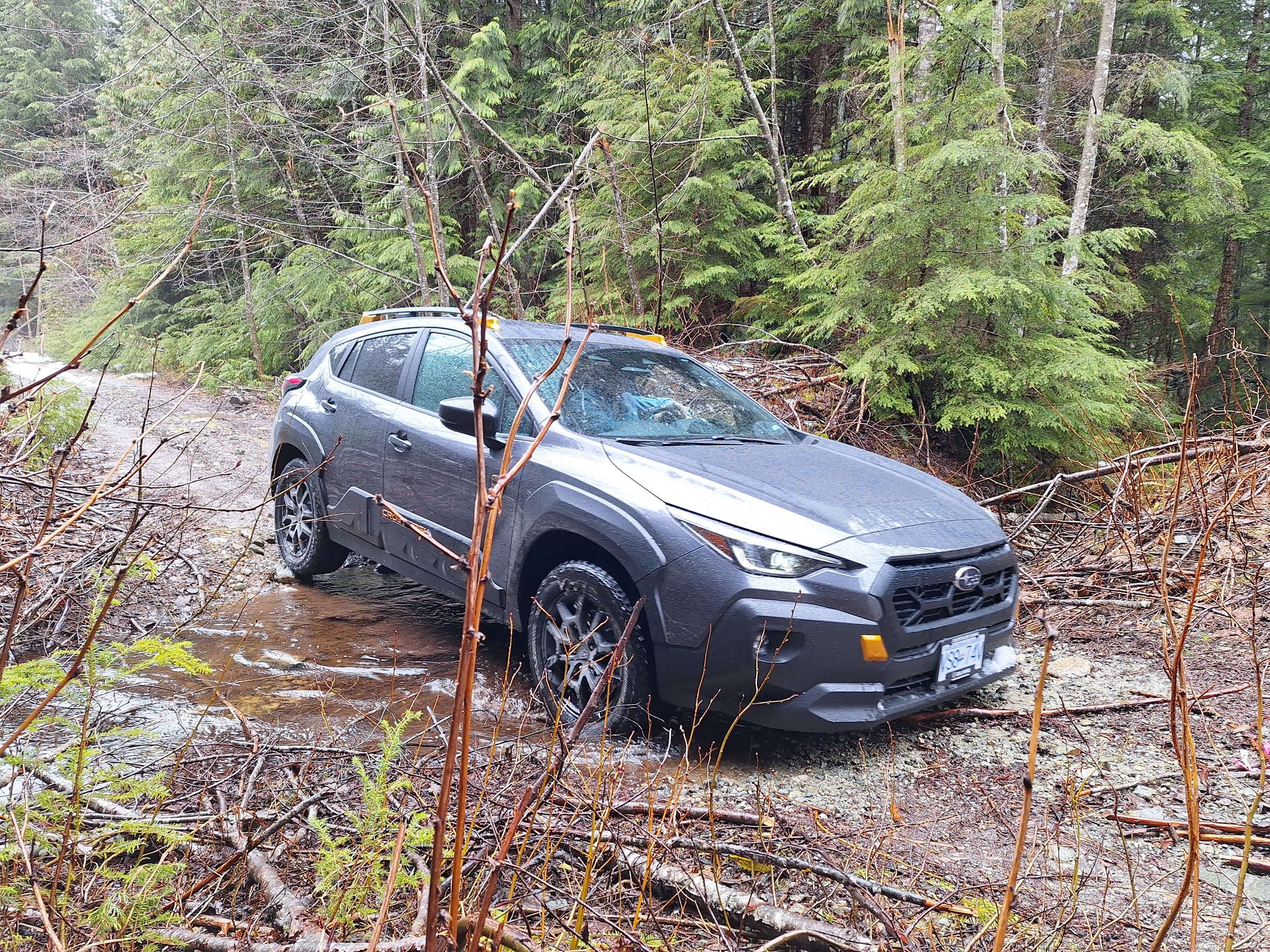
I was going too fast and hit a log hiding in the overgrowth - and bent a tierod. This was the most stressed out I’ve been in a very long time! Our travel group was rescued by a kind friend, an trail repairs were handled by a local company the next day. You can be sure I researched the heck out of this problem and now own a bunch of tools to do it myself next time.